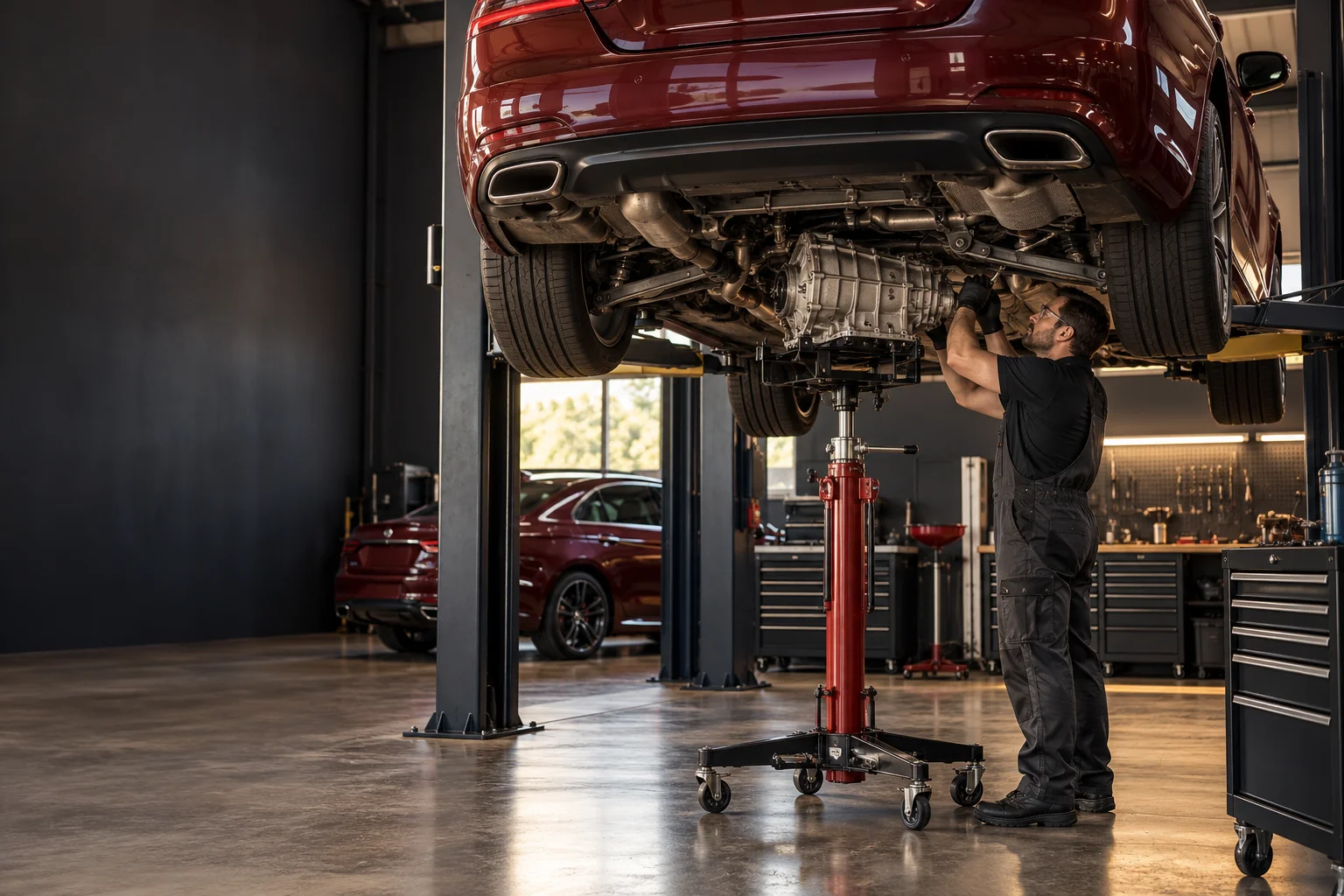
Transmission service can involve several different types of work, so the total cost depends on what your vehicle actually needs. A basic fluid change is different from removing the transmission pan, replacing a filter and gasket, diagnosing shifting problems, or repairing a fluid leak.
The transmission service cost can vary based on the vehicle, transmission type, fluid requirements, parts, labor, and the complexity of the service. Local shop rates and the condition of the transmission can also affect the final estimate.
Before comparing estimates, it is important to understand what type of transmission service your vehicle requires.
What Is Included in Transmission Service?
“Transmission service” can refer to several different maintenance or repair procedures. This is why two drivers may receive very different estimates for what they believe is the same service.
Depending on the vehicle and service required, transmission maintenance may include:
Transmission fluid change
Transmission filter replacement
Transmission pan removal and inspection
Gasket replacement
Fluid level inspection
Leak inspection
Transmission diagnostics
Fluid flush service
Related repairs
The exact procedure depends on the vehicle manufacturer’s recommendations and the design of the transmission.
What Is Included in a Basic Transmission Fluid Change?
Transmission fluid helps lubricate internal components and, in automatic transmissions, supports hydraulic operation and heat control.
Over time, transmission fluid can become contaminated or lose some of the properties needed for proper operation. A fluid change replaces the old accessible fluid with the correct new fluid.
The Service May Include
Draining accessible transmission fluid
Inspecting the condition of the old fluid
Refilling with the specified fluid
Checking for obvious leaks
Confirming the correct fluid level
The exact procedure can vary significantly between vehicles.
Some transmissions have conventional drain plugs, while others require additional steps to establish the correct fluid level at a specific temperature.
A Fluid Change Does Not Always Replace All the Old Fluid
A standard drain and fill usually removes only the fluid that can drain from the transmission pan or case.
Some old fluid may remain inside areas such as:
Torque converter
Cooler lines
Internal passages
This does not necessarily mean the service was incomplete. It is simply how many manufacturer service procedures are designed.
The vehicle’s service information should determine the appropriate method for changing the fluid.
Why Does a Fluid and Filter Service Require More Work?
Some transmissions use a replaceable filter located inside the transmission pan. Accessing this filter can require considerably more labor than simply draining and replacing the fluid.
A more involved service may include:
Draining the transmission fluid
Removing the transmission pan
Inspecting the pan and fluid
Replacing the transmission filter
Replacing the pan gasket or sealing material
Reinstalling the pan
Refilling the transmission with the correct fluid
Checking the fluid level and looking for leaks
Because additional parts and labor may be involved, this type of service is different from a simple drain and fill.
Transmission Fluid Type Can Affect Service Cost
Transmission fluid is not universal. Different vehicles and transmission designs can require specific fluid formulations.
Using the wrong fluid can cause operating problems and may affect transmission performance.
Your vehicle may require:
Manufacturer-specific automatic transmission fluid
Synthetic transmission fluid
CVT fluid
Dual-clutch transmission fluid
A larger quantity of transmission fluid
The amount and type of fluid required can vary considerably from one vehicle to another.
This is why your year, make, model, engine, and transmission type are useful when requesting a transmission service estimate.
Automatic, CVT, and Manual Transmissions Have Different Service Needs
The word “transmission” covers several different designs, and each type can have its own maintenance requirements.
Conventional Automatic Transmission
Traditional automatic transmissions use fluid for lubrication, cooling, and hydraulic functions.
Service procedures can vary depending on the manufacturer and transmission design.
CVT
A continuously variable transmission uses a different operating design and often requires CVT-specific fluid.
Using standard automatic transmission fluid when a vehicle requires CVT fluid can cause serious problems.
Dual-Clutch Transmission
Dual-clutch transmissions may require specialized fluids and service procedures depending on the manufacturer and transmission design.
Manual Transmission
Manual transmissions may use gear oil or another manufacturer-specified fluid. Their service procedure is generally different from that of an automatic transmission.
Because transmission designs vary, transmission service cost cannot be accurately determined from the vehicle’s size or age alone.
Should You Get a Transmission Flush?
“Flush” and “fluid change” are sometimes used to describe the same thing, but they are not always the same service.
Drain and Fill
A drain and fill removes some of the old fluid and replaces it with new fluid.
Transmission Flush
A transmission flush uses equipment or another procedure intended to exchange a larger amount of the old fluid.
Whether a flush is appropriate depends on the vehicle, transmission condition, maintenance history, and manufacturer recommendations.
More Service Is Not Always Better
If the manufacturer recommends a drain and fill, there may be no reason to replace that procedure with a different service simply because it sounds more extensive.
Likewise, a vehicle that is already experiencing transmission problems should not automatically receive a flush before the underlying issue is diagnosed.
Ask the repair shop which procedure is recommended for your specific vehicle and transmission.
Mileage Alone Does Not Tell You When to Service the Transmission
There is no single mileage interval that applies to every transmission.
Service intervals can vary between manufacturers and vehicles. Some vehicles have routine fluid-change intervals, while others have different recommendations for severe driving conditions. Certain transmissions may also use fluids designed for longer service intervals.
Check the Maintenance Schedule For
Normal driving
Severe service
Towing
Commercial use
Frequent stop-and-go driving
Your owner’s manual or manufacturer service information should be the primary source for determining the recommended service interval.
A maintenance schedule based on your actual vehicle is more useful than following a generic mileage recommendation.
Severe Driving Conditions Can Make Fluid Service More Important
Transmission fluid operates under heat and load, and certain driving conditions can place additional stress on the transmission.
Severe Use May Include
Heavy towing
Frequent stop-and-go traffic
Repeated short trips
Commercial driving
High-temperature operation
Mountain driving
Drivers who regularly deal with dense traffic may spend long periods accelerating, stopping, and slowly moving forward.
Whether these conditions change the recommended service interval depends on the vehicle manufacturer’s maintenance guidelines.
Transmission Diagnostics and Maintenance Are Not the Same Service
Routine fluid maintenance is different from diagnosing a transmission that is already showing problems.
A vehicle that is operating normally and is simply due for scheduled maintenance may only require the recommended service.
A transmission that is slipping, shifting harshly, leaking fluid, or showing a warning light may require diagnostic testing before any maintenance procedure is performed.
Diagnosis May Be Needed When You Notice
Delayed shifting
Transmission slipping
Harsh shifts
Shuddering
Fluid leaks
Burning smell
Transmission warning light
Vehicle failing to move normally
Changing the fluid should not be used as a substitute for identifying an existing mechanical or electrical problem.
A Transmission Problem May Not Be Internal
Modern transmissions rely on electronic components as well as mechanical parts.
A shifting problem can sometimes involve:
Sensors
Solenoids
Wiring
Control modules
Engine-related inputs
For this reason, a proper diagnosis is important before assuming the entire transmission needs to be repaired or replaced.
Transmission Fluid Condition Can Provide Useful Clues
During transmission service, the condition of the old fluid can provide useful information about what has been happening inside the transmission.
A technician may inspect the fluid for:
Color
Odor
Debris
Metal particles
Some darkening of the fluid can occur over time. However, a strong burned odor or unusual material in the fluid or transmission pan may require further attention.
Debris Does Not Automatically Mean the Transmission Is Finished
Small amounts of normal wear material can accumulate inside a transmission over time.
However, large particles or significant amounts of metal may indicate internal wear or another problem.
These findings should be considered alongside the vehicle’s symptoms, maintenance history, and diagnostic results rather than viewed on their own.
Also Read: What Does a State Vehicle Inspection Include?
A Transmission Leak Can Increase the Service Cost
If transmission fluid is low, simply adding more fluid does not fix the reason the fluid was lost.
Automatic transmissions are generally closed systems, so a noticeable fluid loss should be investigated.
Common leak areas can include:
Pan gasket
Cooler lines
Axle or output seals
Transmission case seals
Other connections
The work required depends on where the leak is located.
Easy-to-Reach Leak
A pan gasket may sometimes be addressed during a pan and filter service on vehicles designed that way.
Hard-to-Reach Leak
A seal that requires significant disassembly can involve considerably more labor.
A leak can therefore turn a routine maintenance appointment into a repair job.
Labor Time Depends on Transmission Design
Two vehicles receiving similar transmission services may require very different amounts of labor.
One transmission may have an easily accessible drain plug and filter.
Another vehicle may require:
Crossmember removal
A more complicated fill procedure
Removal of additional shields
Temperature monitoring
Specialized tools
The transmission’s design and accessibility can therefore have a significant effect on the amount of work required.
This is another reason online averages cannot determine the exact transmission service cost for a specific vehicle.
European and Specialty Vehicles Can Require Extra Steps
Some European and specialty vehicles may require additional equipment, specialized tools, or manufacturer-specific procedures during transmission service.
These requirements can increase the amount of labor involved even when the fluid itself is not unusual.
For these vehicles, it is especially important to have the service performed according to the manufacturer’s specifications.
OEM-Quality Filters Matter
When a transmission uses a replaceable filter, the quality of the replacement part matters.
The filter helps prevent unwanted particles from circulating through sensitive internal transmission components.
When replacing a transmission filter, ask what type and quality of filter will be used and make sure it is appropriate for your vehicle.
Ask What the Estimate Includes
Before approving a transmission filter or fluid service, ask the repair shop exactly what is included.
Important details include:
Filter brand
Gasket or seal
Fluid specification
Quantity of fluid
Labor
Disposal or shop charges
Having these details clearly listed makes it easier to understand and compare estimates.
Can Transmission Service Prevent a Major Repair?
Regular maintenance cannot prevent every transmission failure.
Internal components can eventually wear, sensors can fail, and other mechanical or electrical problems can occur.
Proper fluid service can still help maintain lubrication, cooling, and normal transmission operation when performed according to the manufacturer’s maintenance schedule.
Service Cannot Repair
Burned clutches
Broken gears
Failed bearings
Mechanical damage
Severely worn internal components
This is why routine maintenance should not be considered a replacement for proper diagnosis or repair when symptoms are already present.
Is a Cheap Transmission Service Always a Good Deal?
Not necessarily.
An advertised transmission service may cover only a basic fluid exchange, while another estimate may include filter replacement, pan removal, a gasket, additional fluid, or other procedures.
Before comparing estimates, ask:
Which fluid will be used?
How much fluid is included?
Is the filter being replaced?
Is the transmission pan being removed?
Is a gasket included?
Does the vehicle require special equipment?
Are taxes or shop fees additional?
Two services that appear similar may actually involve very different procedures.
The most useful comparison is based on the work being performed, not simply the advertised price.
How to Compare Transmission Service Estimates
When requesting estimates, provide the same vehicle and service information to each shop.
Vehicle Information
Provide:
Year
Make
Model
Engine
Mileage
Transmission type, if known
Ask Each Shop to State
Exact service being performed
Fluid type
Fluid quantity
Filter replacement
Pan gasket replacement
Labor
Additional fees
Once the scope of work is clear, it becomes much easier to understand what each estimate includes.
Transmission Service Checklist
Before booking transmission maintenance, work through these questions.
Service History
When was the fluid last changed?
Was the filter changed?
Do you have service records?
Vehicle Behavior
Is the transmission shifting normally?
Is there any slipping?
Are any warning lights showing?
Are there any fluid leaks?
Is there a burning smell?
Estimate
Is the correct fluid specification confirmed?
Is labor included?
Is the filter included where required?
Is the gasket or seal included?
Are additional fees explained?
A routine service on a properly operating transmission should be approached differently from a vehicle that is already showing mechanical or electrical symptoms.
Understand What Your Transmission Actually Needs
The transmission service cost depends on several factors, including the type of service, transmission design, fluid specification, filter requirements, labor, vehicle make and model, and any existing leaks or faults.
A basic fluid change is a different job from a filter and pan service, transmission diagnosis, leak repair, or major transmission repair.
The best way to determine what your vehicle needs is to follow the manufacturer’s maintenance recommendations and have the transmission inspected when symptoms appear.
Quality 1st Auto Repair provides transmission services for automatic and manual vehicles in Rahway, including transmission fluid maintenance and fluid-flush services. If your vehicle is due for transmission maintenance or has started shifting differently, schedule transmission service with Quality 1st Auto Repair to identify the appropriate fluid, service procedure, and any existing transmission problems before the work begins.